Modular Seclusion Room Door Entry Training System
Realistic Mental Health Training for NHS and Healthcare Teams
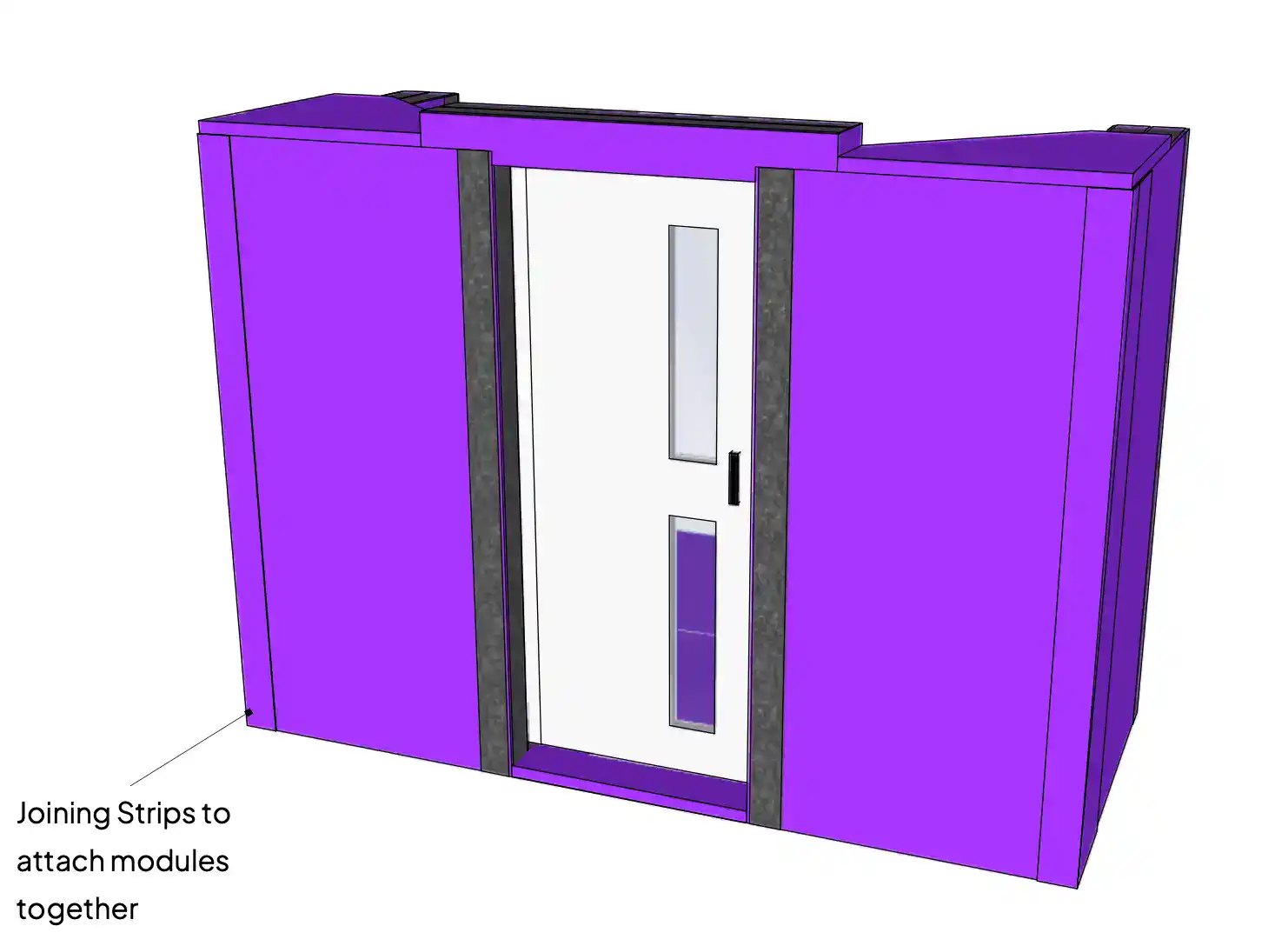
Our Modular Seclusion Room Door Entry Training System has been designed to create a realistic scenario-based seclusion room environment. It allows teams to rehearse safe entry, movement, positioning, floor placement and exit procedures in a controlled training setting.
Too often, training providers attempt to simulate seclusion room doors using chairs, cones, tape or improvised equipment. These setups may help explain the idea, but they do not properly replicate the physical challenges, spatial awareness, communication demands and team coordination required during real incidents.
It is time to professionalise restrictive intervention and mental health training.
The Problem with Traditional Training Setups
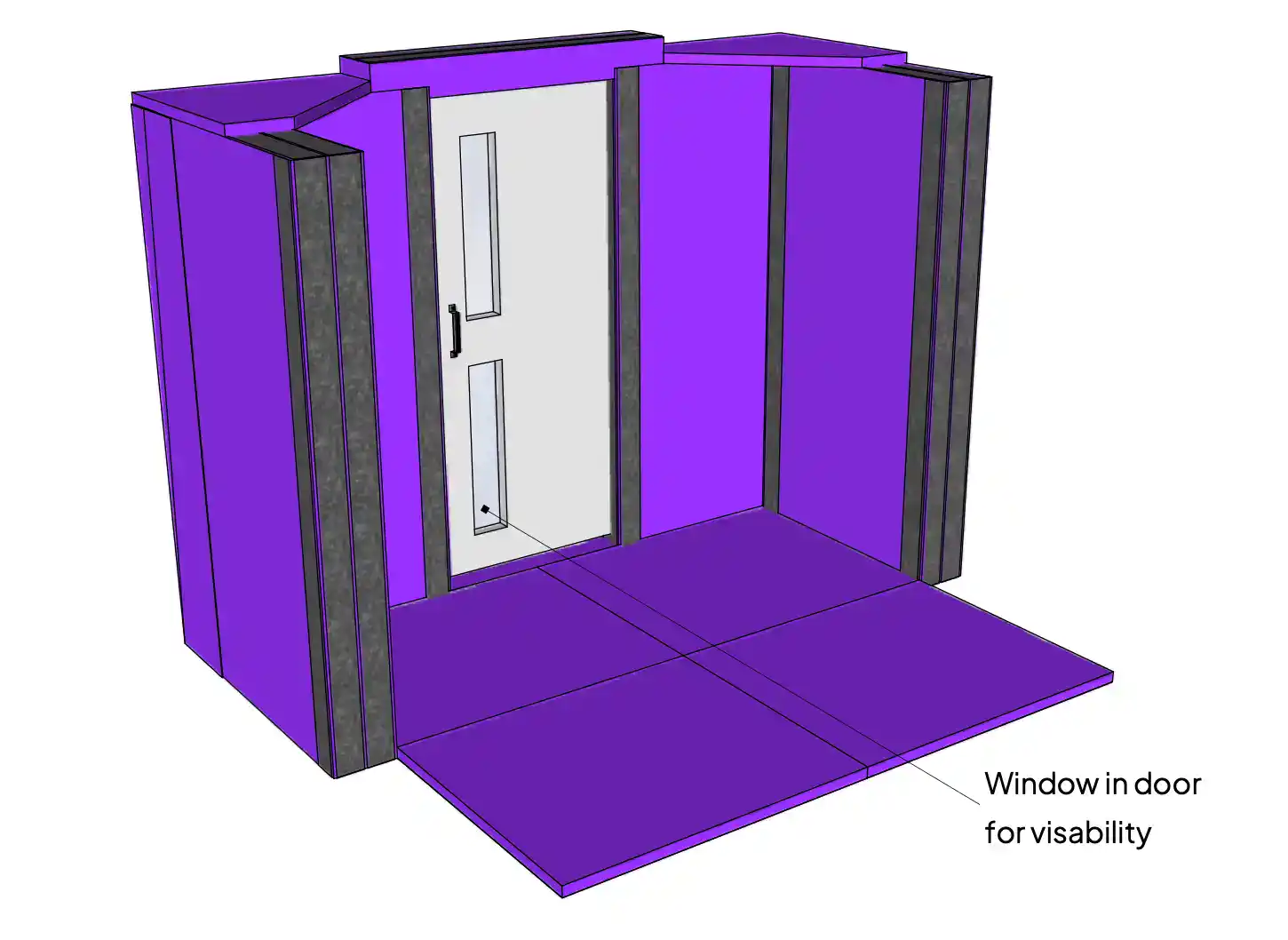
Our Modular Seclusion Room Door System
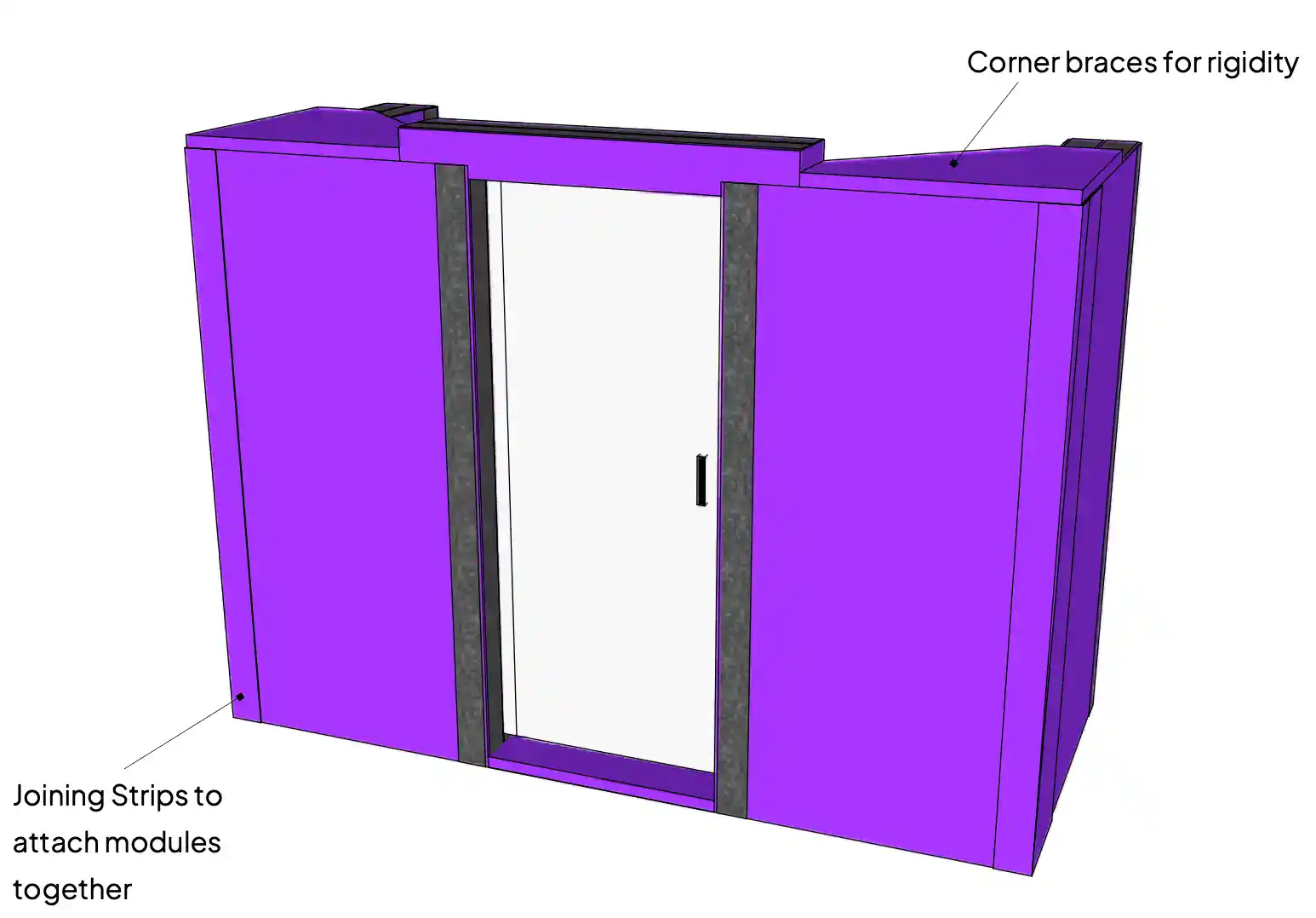
Designed for repeated scenario-based training, the system helps staff practise realistic restrictive intervention and seclusion room procedures safely and effectively.
The system is made from foam, helping to reduce the risk of injury during repeated training drills. It is designed to be practical, safe and easy to use in healthcare training environments. The modular sections Velcro together, allowing the system to be assembled for training and then taken apart for storage.
The design can also include floor mats to help map out the room space and provide a more suitable surface for staff when practising lowering techniques and floor placement.
Key Features
Supporting the S3 Physical Intervention Model
This training system works perfectly alongside our S3 Physical Intervention Model, Simple. Safe. Secure.
The S3 model has been developed to support safer, more ethical and clinically appropriate physical intervention practices across mental health services, NHS trusts, healthcare settings, education environments, secure care and residential services.
By combining realistic environmental training with the S3 model, organisations can deliver immersive scenario-based mental health training that improves staff safety, communication, confidence and decision-making.
Learn more about our S3 Physical Intervention Training here.
Designed for NHS Training Departments
The Modular Seclusion Room Door Entry Training System has been designed for training departments that want to improve the realism and quality of restrictive intervention, seclusion and scenario-based mental health training.
It gives instructors a practical way to rehearse doorway entry, team positioning, movement, communication, safe floor placement and exit procedures without relying on chairs, cones or improvised layouts.
For NHS training departments, this can help create a more consistent approach to practical training. It also allows teams to repeat the same movement patterns in a realistic environment, helping staff build confidence before they are ever required to respond to a real incident.
What the System Helps Staff Practise
The system supports realistic rehearsal of high-risk movement scenarios, including approaching and managing an outward-opening seclusion room door, moving through the doorway while supporting or restraining a service user, maintaining team positioning, communicating under pressure, lowering safely to the floor, exiting the room and securing the door.
This type of training helps staff understand the physical space, the order of movement and the importance of working as a coordinated team.
Why Chairs and Cones Are Not Enough
Chairs, cones and tape can be useful for explaining a basic layout, but they do not properly recreate the physical challenges of moving through a doorway, managing an outward-opening door or coordinating staff movement in a confined space.
A realistic doorway system helps staff physically rehearse the process, understand restricted space and practise the movement in a way that is much closer to real clinical environments.
Ideal For
The Modular Seclusion Room Door Entry Training System is ideal for NHS mental health trusts, PICU and acute mental health units, secure care services, learning disability services, healthcare training providers, restrictive intervention instructors and simulation training environments.
It is particularly useful for organisations that want to make their restrictive intervention training more realistic, more consistent and more closely aligned to the environments their staff work in.
Available as a Product or as Part of a Training Package
The Modular Seclusion Room Door Entry Training System can be supplied as a standalone training product or discussed as part of a wider physical intervention, restrictive practice or scenario-based training package.
UK Patient Care can also support organisations with practical training, instructor development and scenario design to help teams get the most from the equipment.
Improve Confidence Through Repetition
Safe seclusion room management relies on clear communication, coordinated teamwork and repeated physical rehearsal.
Our modular seclusion room door system allows healthcare teams to train realistically, refine movements and build safer responses through consistent scenario practice.
Because when it comes to restrictive intervention and mental health care, realism matters.
Speak to UK Patient Care
To learn more about our Modular Seclusion Room Door Entry Training System or our S3 Physical Intervention Model, contact UK Patient Care today.
Email: info@ukpatientcare.co.uk
Call: 0113 873 0715
FAQ’s
What is the Modular Seclusion Room Door Entry Training System?
The Modular Seclusion Room Door Entry Training System is a practical training aid designed to simulate a seclusion room doorway. It allows healthcare and mental health teams to rehearse safe entry, movement, positioning, floor placement and exit procedures in a controlled training environment.
Who is this product designed for?
It is designed for NHS mental health trusts, healthcare training departments, PICU teams, acute mental health services, secure care providers, learning disability services, restrictive intervention instructors and simulation-based training teams.
Why is realistic seclusion room training important?
Seclusion room entry can be a high-risk scenario involving teamwork, communication, movement, positioning and safe exit procedures. Staff need the opportunity to physically practise these skills, not just discuss them in a classroom or watch a demonstration.
Why not use chairs, cones or tape to mark out a doorway?
Chairs, cones and tape can help explain a basic layout, but they do not properly recreate the physical challenges of moving through a doorway, managing an outward-opening door or coordinating team movement in a confined space. A realistic doorway system gives staff a more practical and consistent training environment.
Is the system suitable for NHS training departments?
Yes. The system has been designed with NHS and healthcare training environments in mind. It can support practical restrictive intervention training, mental health training, seclusion room scenario practice and instructor-led rehearsal.
Is the door designed to replicate an outward-opening seclusion room door?
Yes. The system is designed to help simulate an outward-opening style seclusion room door so staff can practise realistic doorway entry, positioning and exit procedures.
What is the system made from?
The system is foam-built, helping to reduce the risk of injury during repeated practical training drills. It is designed to be modular, practical and suitable for healthcare training environments.
Can the system be assembled and taken apart?
Yes. The modular sections are designed to Velcro together, allowing the system to be assembled for training and then dismantled for storage.
Are floor mats available?
Yes. Optional floor mats can be used to help map out the seclusion room space and provide a more suitable surface for practising lowering techniques and floor placement.
Can visibility panels be included?
Yes. The design can include optional visibility panels in the door, helping to make the training system more realistic for healthcare environments.
Can UK Patient Care provide training alongside the system?
Yes. UK Patient Care can discuss the system as a standalone product or as part of a wider training package, including restrictive intervention, physical intervention and scenario-based mental health training.
Is this suitable for simulation training?
Yes. The system is well suited to simulation and scenario-based training environments where teams need to practise realistic movement, communication, decision-making and role allocation.