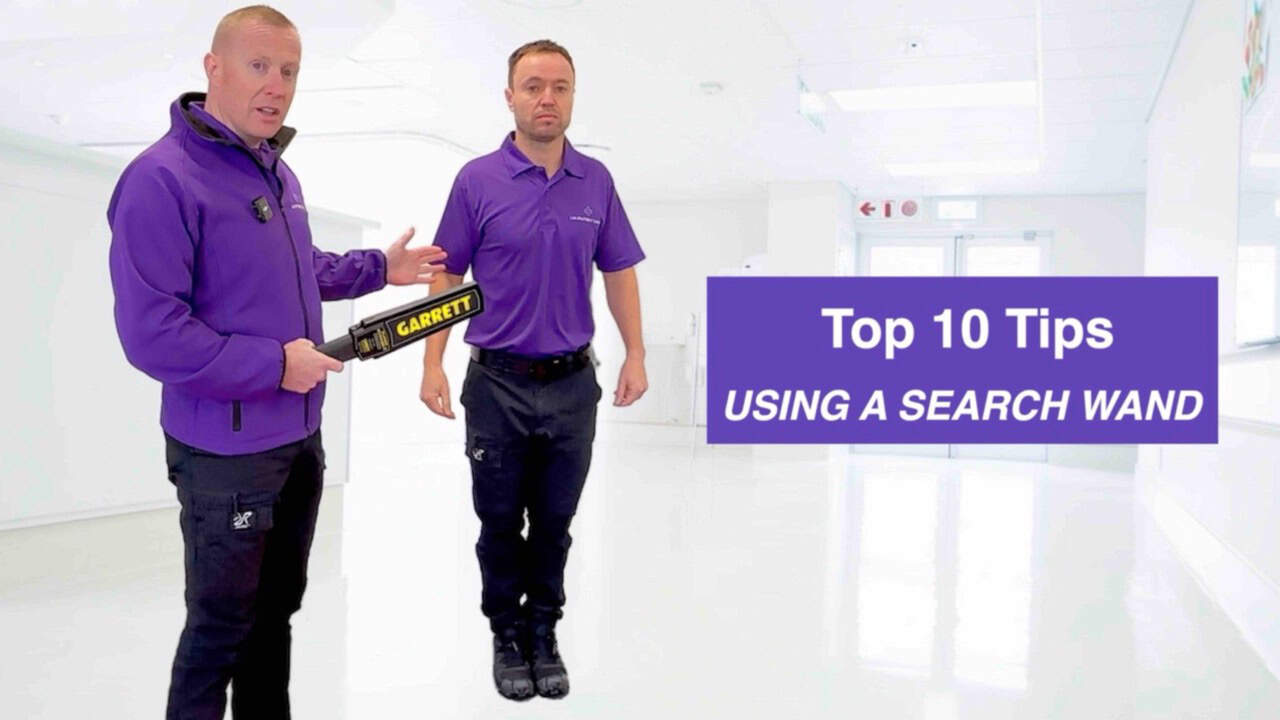
At UK Patient Care, we specialise in search training for mental health and healthcare environments. In the video we demonstrate best practice techniques for using a search wand safely, ethically and professionally. Below, we expand on our top 10 tips for search wand use in mental health settings.
Search Wand – Top 10 Tips
1. Switch On and Test the Search Wand Before Use
Before beginning any search, always ensure the search wand is switched on and functioning correctly. Test the device on a known metallic object to confirm detection.
This step is frequently overlooked, and searches are often attempted with devices that are switched off or faulty. An ineffective search increases risk and undermines the purpose of the process. Testing the wand also demonstrates professionalism and reassures both staff and the person being searched.
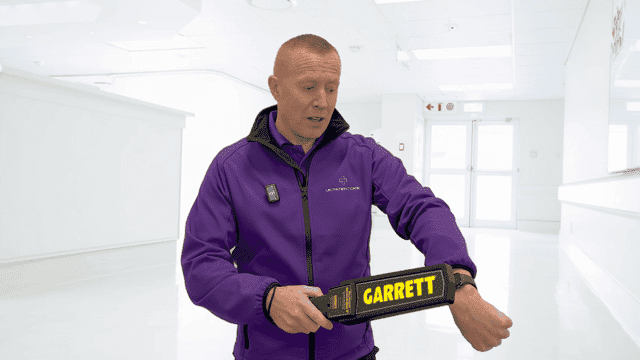
2. Choose an Appropriate Search Environment
Searches in mental health settings must always be conducted with dignity and respect. Where possible, use a private and suitable room rather than communal areas.
An appropriate search environment should ideally include CCTV coverage for accountability, a chair for footwear checks and a clear surface to place recovered items. The space should be calm, uncluttered and free from unnecessary stimuli to help reduce anxiety and agitation.
3. Ensure Two Members of Staff Are Present
Having two staff members present during a search protects everyone involved. This is not only about safeguarding against complaints but also about maintaining safety and oversight.
The second staff member can observe body language, identify early warning signs, monitor for distraction techniques, spot concealed items such as lumps or bulges and quality-check the search process.
4. Test for Compliance Early in the Search
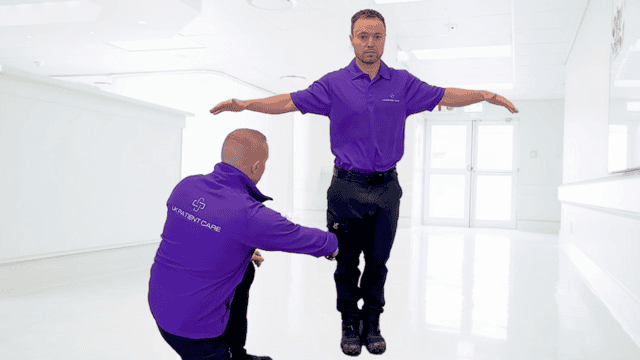
Before starting the search, ask the person to stand with their feet together. This tests compliance and provides an early indicator of potential non-compliance or escalation.
If a person becomes non-compliant, they will often widen their stance to improve balance or prepare to move. When searching the inside leg, asking the person to place one foot slightly in front of the other supports safety and control.
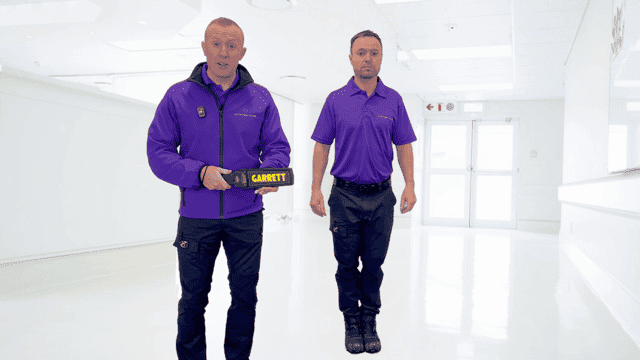
5. Check Hands Before Entering Personal Space
Hands are one of the most common areas for concealed items and are often overlooked.
Before moving into personal space, visually check both hands, ask the person to open them and check between the fingers. This reduces the risk of staff being surprised by an item once proximity increases.
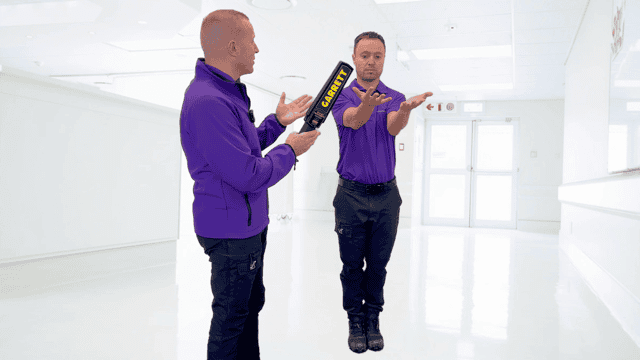
6. Use Safe Angles of Approach
Standing directly in front of or behind a person can feel aggressive, threatening, or triggering, particularly for individuals with trauma histories.
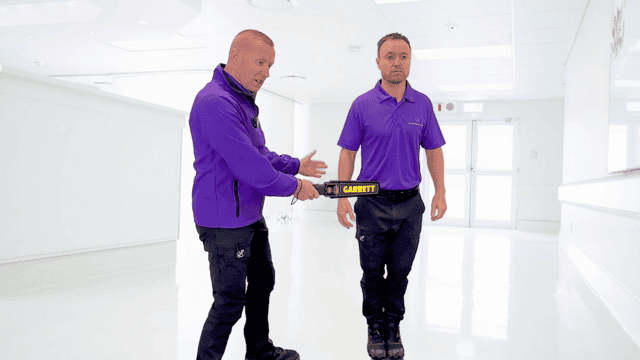
Always stand to the side of the person, remain within their line of sight, avoid blocking exits and maintain a balanced stance. This approach supports de-escalation and improves staff safety.
7. Maintain Correct Search Wand Proximity
For the search wand to be effective, it must be used at the correct distance. Keep the wand within three to four inches of the body.
If the wand is too far away, metallic items may not be detected. A steady and controlled approach helps maintain effectiveness while avoiding unnecessary intrusion.
8. Follow a Systematic Search Pattern
A structured and consistent search pattern reduces the risk of missed areas and ensures professional, defensible practice.
Using the same structure every time helps staff remain focused, particularly in high-pressure situations. Failing to plan is planning to fail.
9. Re-Check Detection Areas
If the search wand detects an item and it is removed, always re-scan the area.
People may conceal multiple items in the same location and failing to re-check increases the risk of an incomplete search and ongoing safety concerns.
10. Communicate Clearly Throughout the Search
Clear communication is essential in mental health environments. Explain what you are doing, what will happen next and why the search is necessary.
Calm and respectful communication reduces anxiety, supports cooperation, maintains therapeutic relationships and demonstrates procedural fairness.
Why Search Wand Use Is important in Mental Health Environments
Searches play a vital role in risk management across inpatient mental health units, secure services and forensic settings. Effective searching helps prevent access to weapons, sharps, ligatures and other prohibited items that could place patients, staff, or others at risk.
When carried out correctly, search wand use supports violence and aggression reduction, suicide and self-harm prevention, trauma-informed care, staff confidence and defensible decision-making.
Embedding Best Practice Through Training
The video attached to this article demonstrates these techniques in practice and supports staff in developing confidence and competence when using search wands in mental health environments.
UK Patient Care delivers search training tailored specifically to healthcare and mental health services. Our approach prioritises safety, dignity and trauma-informed practice. To find out more about our search training visit our pages below.
Search Training Courses | Enhancing Skills & Safety
Authorised Search Officer (ASO) Instructor Training Course
info@ukpatientcare.co.uk
0113 873 0715