At a Glance
Emergency Therapeutic Engagement Deployment
Hospital: North Middlesex University Hospital
Situation: Two patients presenting with highly complex behaviours of concern requiring immediate specialist support.
Our Response:
- Immediate out-of-hours mobilisation of a specialist Therapeutic Engagement Team.
- Partnership working alongside clinical teams, RMNs and hospital security.
- Trauma-informed therapeutic engagement.
- Specialist sensory resources and activities.
- Emergency deployment of Safety Pods through our partners at Safety Pods International.
- Advanced digital reporting throughout the deployment.
- Positive Behaviour Support Plans developed.
- Smooth transition into more appropriate care environments.
- Collaborative handover to partner agencies.
- Letter of appreciation received from the hospital ward team.
A Growing Challenge Across the NHS
Every day, NHS hospitals provide exceptional care to patients experiencing mental ill health, emotional distress, autism, dementia, learning disabilities and other complex needs.
As these presentations become increasingly complex, hospitals are often faced with managing behaviours of concern in environments that were never designed for prolonged therapeutic support.
Doctors.
Nurses.
Registered Mental Health Nurses.
Hospital Security.
Every profession plays a vital role.
Yet there remains a gap between clinical treatment and maintaining immediate safety.
That gap is therapeutic engagement.
At UK Patient Care, our specialist Therapeutic Engagement Teams exist to bridge that gap by helping hospitals reduce distress, improve safety and achieve better outcomes through compassionate, trauma-informed practice.
An Urgent Call That Couldn’t Wait
Recently, our Operations Team received an urgent evening request for assistance from North Middlesex University Hospital.
Two patients were displaying behaviours of concern that had become increasingly difficult to manage despite the dedication and professionalism of ward staff, clinicians and hospital security.
The situation had escalated.
Staff had been assaulted.
Property had been damaged.
The patients’ needs had become too complex for the existing strategies alone.
Recognising the urgency, UK Patient Care immediately mobilised a large team of experienced Therapeutic Engagement Officers to provide specialist support.
When hospitals need help, they need it quickly.
That is exactly why our rapid response service exists.

More Than Additional Staff — Specialists in Therapeutic Engagement
One of the biggest misconceptions about our service is that we simply provide additional staffing.
We don’t.
We provide specialists.
Our Therapeutic Engagement Officers are carefully selected for their empathy, communication skills, emotional intelligence and ability to build trust with people experiencing significant distress.
Every member of our team receives extensive specialist training including:
• Trauma-Informed Care
• Positive Behaviour Support
• De-escalation and Conflict Resolution
• Safeguarding
• Autism and Neurodiversity
• Learning Disabilities
• Mental Health Awareness
• Communication Techniques
• Risk Assessment
• Person-Centred Practice
Many of our officers also have extensive experience supporting children, young people and adults with highly complex behavioural presentations across hospitals, residential care, education and community settings.
Our philosophy is simple.
We don’t ask…
“How do we control this behaviour?”
We ask…
“What is this behaviour trying to communicate?”
That change in thinking changes outcomes.
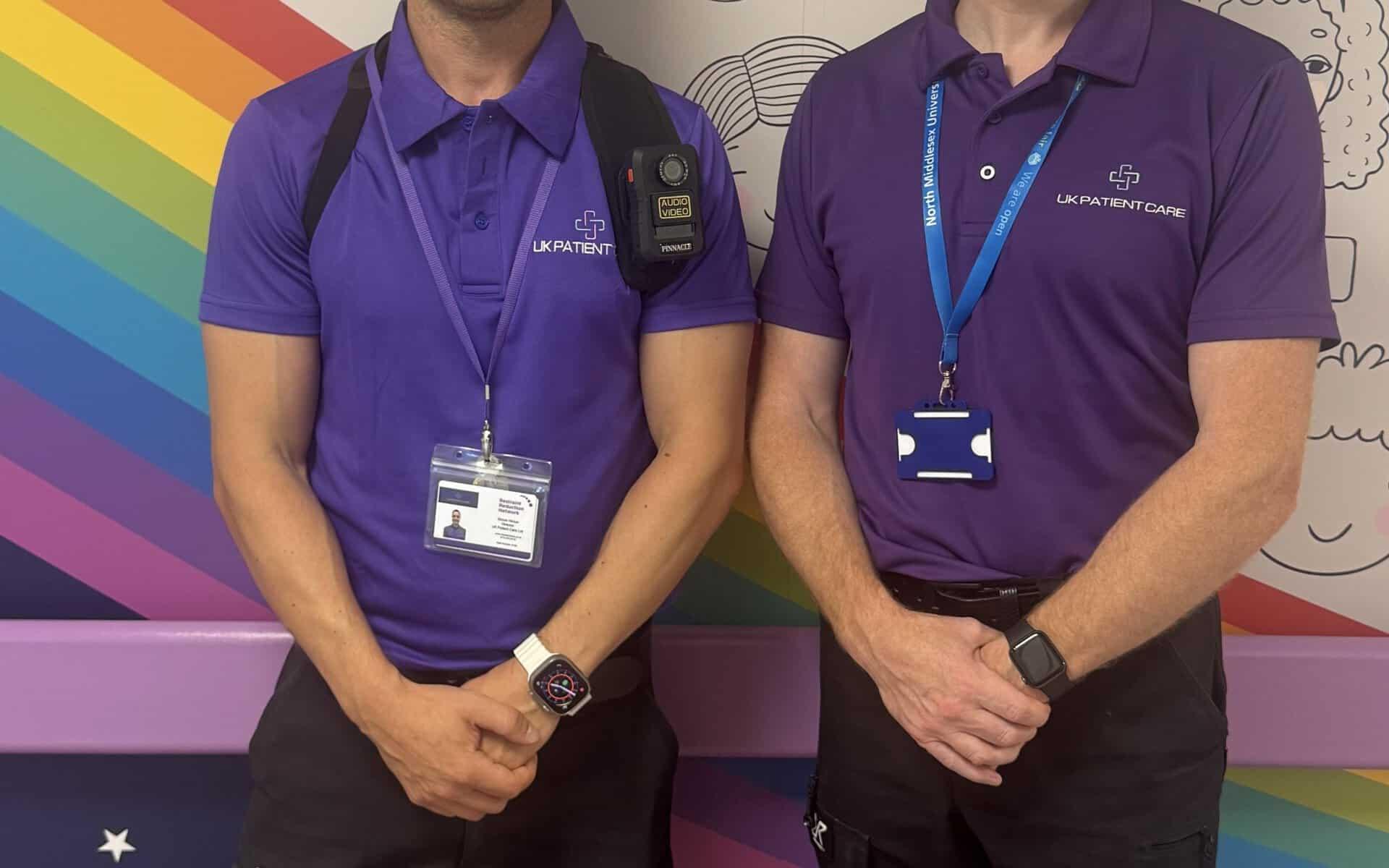
Why Our Purple Uniform Makes a Difference
Something as simple as a uniform can influence an entire interaction.
Traditional security uniforms understandably represent authority and enforcement.
For many patients, particularly those experiencing trauma, psychosis, autism, sensory overload or previous negative experiences, that appearance alone can increase anxiety.
Our distinctive purple uniform was deliberately designed to communicate something very different.
Support.
Compassion.
Safety.
Patients quickly understand that our officers are there to engage with them rather than confront them.
That visual distinction often breaks down barriers before the first conversation even begins.
Combined with calm communication and therapeutic engagement, it creates an environment where trust can develop naturally.
Sometimes the smallest differences make the biggest impact.

Engagement Before Intervention
Our officers don’t arrive expecting confrontation.
They arrive prepared to build relationships.
Every deployment includes specialist engagement resources designed to reduce distress and encourage meaningful interaction.
Games.
Sensory equipment.
Activities.
Communication resources.
Distraction techniques.
These are not extras, they are clinical tools that support emotional regulation, reduce anxiety and help patients regain a sense of control.
Our objective is always the same:
Reduce distress.
Reduce trauma.
Reduce restrictive interventions wherever safely possible.
Because every intervention avoided through engagement represents a better experience for both patients and staff.
Strong Partnerships Create Better Outcomes
No organisation can meet every patient’s needs alone.
One of the strengths of our model is the partnerships we have built with organisations that share our commitment to compassionate care.
During this deployment we contacted our trusted partners at Safety Pods International, who immediately arranged for specialist Safety Pods to be delivered to the hospital out of hours.
This rapid response meant patients had access to additional sensory support at a time when it was needed most.
It is an excellent example of how collaboration between organisations can improve patient care and enhance therapeutic environments during periods of crisis.

Supporting Technology
High-quality care deserves high-quality documentation.
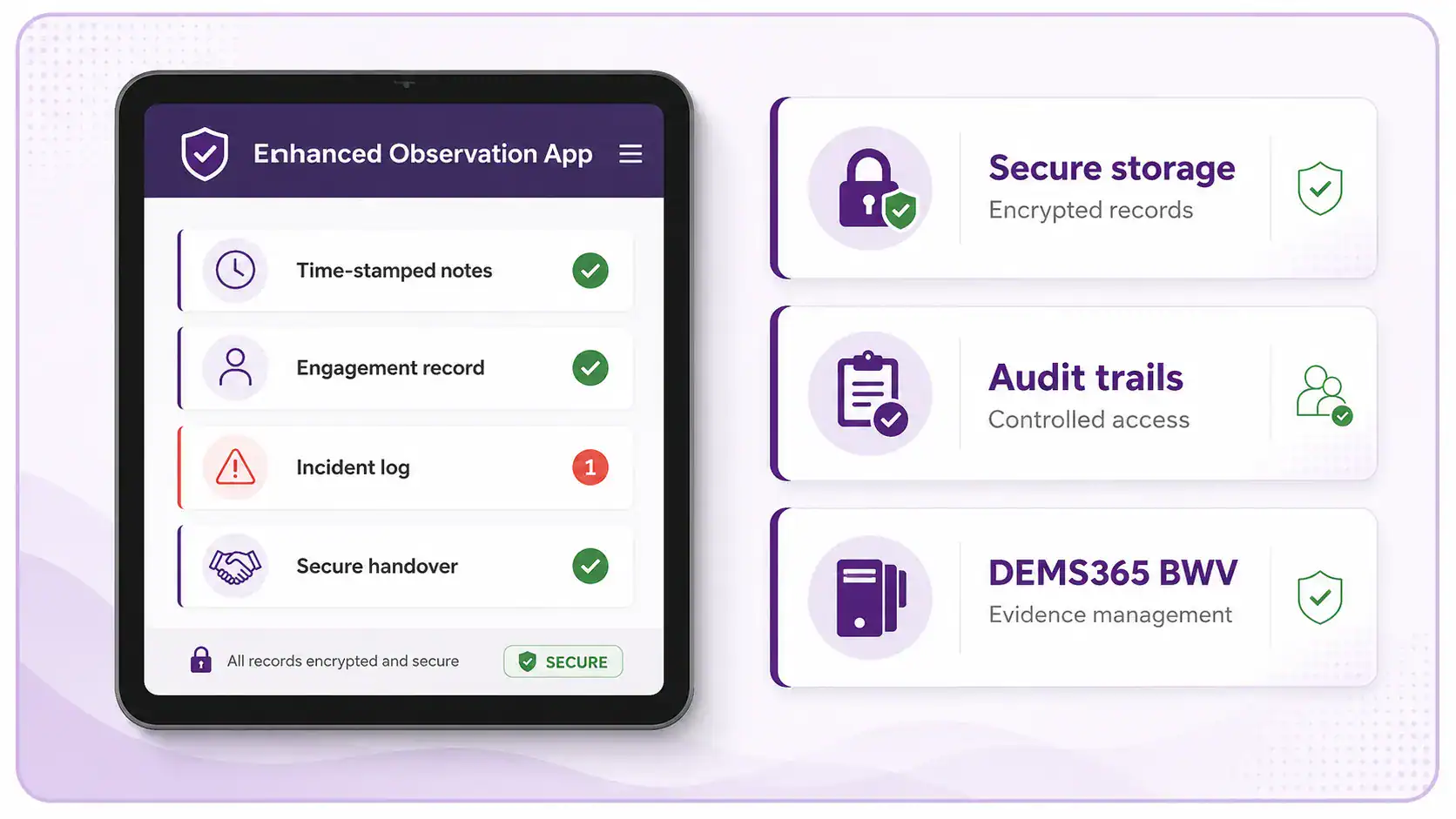
Throughout every deployment our officers complete comprehensive digital records using our secure reporting platform.
Our documentation captures:
- Therapeutic engagement.
- Behavioural observations.
- Patient engagement.
- Risks and protective factors.
- De-escalation strategies.
- Outcomes achieved.
This provides accurate, contemporaneous information that supports continuity of care, robust information governance and effective communication between professionals.
By the end of our deployment, hospitals receive a detailed record of the patient’s journey, not simply an incident report.
Changing the Outcome
When our team arrived, the ward had experienced a prolonged period of pressure.
Staff had already been assaulted.
Property had been damaged.
The patients remained distressed.
Rather than introducing more authority into the environment, our officers introduced calm.
We listened.
We observed.
We engaged.
We built trust.
Slowly, the atmosphere changed.
Relationships developed.
Anxiety reduced.
Communication improved.
Throughout our involvement there were no further assaults.
Restrictive interventions were avoided wherever safely possible.
Most importantly, both patients were successfully supported into more appropriate care environments where their individual needs could be met more effectively.
By helping facilitate earlier transfers into suitable settings, our involvement not only improved the patient journey but also had the potential to reduce prolonged use of acute hospital resources and support more efficient use of clinical and staffing capacity.
The right patient.
In the right place.
At the right time.
That is good care.
Beyond the Immediate Crisis
Our work does not finish when the immediate risk has reduced.
Before handover, our team developed comprehensive Positive Behaviour Support Plans for each patient.
These plans documented:
- Individual triggers.
- Preferred communication methods.
- Effective engagement strategies.
- Sensory preferences.
- Early warning signs.
- Successful de-escalation techniques.
- Recommendations for ongoing care.
These plans were shared with the receiving teams and local authority to support a smooth transition and ensure continuity of care.
Too often, valuable knowledge is lost during handovers.
We believe every patient deserves better than that.

Partnership Working That Bridges the Gap
The future of healthcare depends upon organisations working together.
Our officers regularly work alongside:
NHS Trusts.
Hospital Security.
Registered Mental Health Nurses.
Police.
Local Authorities.
Ambulance Services.
Community Mental Health Teams.
Social Care Providers.
We don’t replace these services.
We connect them.
When professionals work together around a shared understanding of the patient, everyone benefits.
Recognition That Means the Most
Following this deployment, we were incredibly proud to receive a letter of appreciation from the ward team at North Middlesex University Hospital.
Their words recognised not only the professionalism of our officers, but also the compassion, patience and positive impact Therapeutic Engagement had on both patients and staff.
There is no greater endorsement than recognition from frontline healthcare professionals.
With permission, we are proud to share that letter below.

Why Hospitals Choose UK Patient Care
Hospitals partner with UK Patient Care because we offer more than staffing.
We provide a complete Therapeutic Engagement solution.
– Rapid nationwide mobilisation.
– Specialist Therapeutic Engagement Officers.
– Trauma-informed practice.
– Young people and complex behaviour specialists.
– Positive Behaviour Support Planning.
– Secure digital reporting.
– Partnership working across health and social care.
– Access to specialist therapeutic resources.
– Compassionate, relationship-centred practice.
– A focus on reducing restrictive interventions wherever safely possible.
Looking Forward – Making Positive Change
Healthcare is evolving.
Patient complexity is increasing.
Hospitals deserve access to specialist services that complement clinical care, support security teams and improve patient outcomes.
Therapeutic Engagement is not about replacing existing services.
It is about strengthening them.
By combining specialist people, trauma-informed practice, innovative partnerships, advanced technology and genuine compassion, UK Patient Care is helping shape a new model of behavioural support within acute healthcare.
Because every patient deserves to be understood.
Every member of staff deserves to feel supported.
And every hospital deserves a partner who can bridge the gap between crisis and compassionate care.
If your organisation is looking to develop a safer, more therapeutic approach to managing behaviours of concern, we’d welcome the opportunity to work alongside you.
Together, we can create safer hospitals, stronger partnerships and better outcomes for the people who need us most.
info@ukpatientcare.co.uk
0113 873 0715