1. Understand the Importance of PMVA Training:
PMVA training is crucial in health and social care as it equips staff with the necessary skills and knowledge to de-escalate potentially violent situations, prevent harm, and ensure a safe environment for all individuals involved. By investing in PMVA training, organisations demonstrate their commitment to staff and patient safety.

2. Tailor Training Programs to Specific Needs:
When designing PMVA training programs for health and social care settings, it’s essential to consider the unique challenges and risks that staff may encounter. Customising training modules to address specific scenarios and environments can enhance the effectiveness of the training and better prepare staff to handle potential threats.

3. Focus on Communication and De-Escalation Techniques:
Effective communication is key in preventing and managing violent and aggressive behaviour. PMVA training should emphasise the importance of active listening, empathy, and non-verbal cues in diffusing tense situations. Staff should be trained in de-escalation techniques to mitigate conflict and promote a peaceful resolution.

4. Practice Realistic Scenarios:
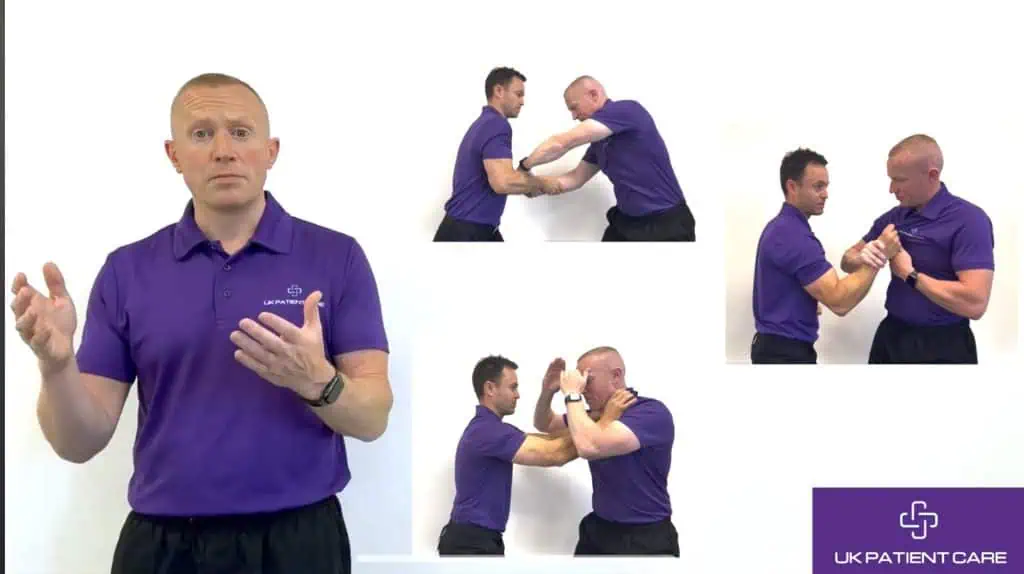
Simulation exercises and role-playing scenarios can provide valuable hands-on experience for staff to apply their PMVA training skills in a realistic setting. By practicing response strategies in a controlled environment, employees can gain confidence and readiness to handle challenging situations effectively.

5. Provide Ongoing Support and Refresher Training:
PMVA training should not be a one-time event but an ongoing process to ensure that staff remain competent and up-to-date on best practices. Regular refresher courses, continuous support, and debriefing sessions following incidents can help reinforce learning and promote a culture of safety within the organisation. We recommend that training is refreshed every 12 months and organisations hold regular CPD days to keep their skills sharp. At UK Patient Care we have online resources that can assist with keeping your skills up to date.
Conclusion:
In conclusion, PMVA training plays a vital role in promoting a safe and secure environment in health and social care settings. By following these top tips for effective PMVA training, organisations can empower their staff to prevent and manage violence and aggression successfully. Investing in comprehensive PMVA training demonstrates a commitment to staff and patient safety, ultimately leading to improved outcomes for all individuals involved.
Click here to view our PMVA course.
Contact us at info@ukpatientcare.co.uk for more information.